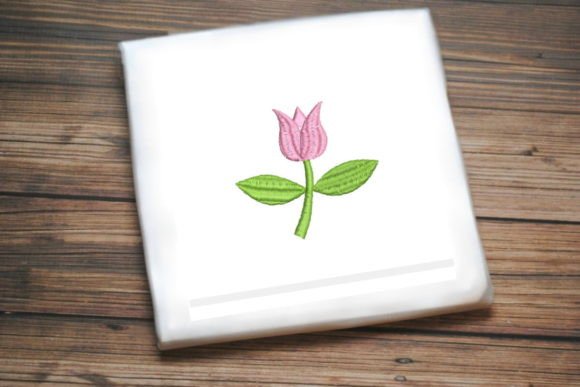
Reviewing Beautiful Pink Tulip for Business Merch
As an embroidery designer who has spent years digitizing and testing files for commercial use, I approach every new machine embroidery design with a critical eye. It is not enough for a pattern to look pretty on a screen; it must perform under the needle, withstand washing, and elevate the brand it represents. Recently, I evaluated Beautiful Pink Tulip, a design from the Single Flowers category, specifically to determine its viability for small business merchandise and branded patch applications. My goal was to see if this digital asset could transition seamlessly from a simple decorative element to a core component of a cohesive brand identity.
First Impressions: Elegance Meets Approachability
The first thing that strikes you about Beautiful Pink Tulip is its balance between elegance and approachability. The description promises a design that is "fun and easy to stitch," and visually, it delivers on that premise without sacrificing sophistication. For a boutique owner or a creative studio, this duality is crucial. You want a logo or accent that feels premium but not stiff. The tulip motif inherently carries connotations of spring, renewal, and gentle beauty, making it an excellent choice for businesses in the floral, bakery, bridal, or wellness sectors.
Unlike complex botanical illustrations that can become muddy when stitched, this design appears to prioritize clean lines and clear color separation. This suggests that the digitizer considered the limitations of thread and fabric, aiming for a look that is "gorgeous when stitched onto any fabric." From a branding perspective, this versatility allows for consistent application across various mediums, ensuring that your visual identity remains recognizable whether it is on a delicate silk scarf or a sturdy canvas tote.
Real-World Applications for Small Business Merch
When integrating Beautiful Pink Tulip into a product line, the possibilities for small business merch are extensive. Here is how I envision this design performing in real-world scenarios:
- Embroidered Patches: This is perhaps the strongest use case. A well-digitized tulip makes for a stunning iron-on or sew-on patch. Patches allow customers to add a touch of personality to jackets, bags, or hats. For a florist or garden center, selling these patches as add-ons can significantly increase average order value.
- Apron Embroidery: For bakeries, cafes, or craft studios, staff uniforms are walking billboards. Placing this tulip on the chest pocket or upper corner of an apron adds a professional, handmade touch that customers appreciate. It signals attention to detail and care.
- Tote Bag Design: Canvas totes are staples for eco-friendly brands. The contrast of pink thread against natural cotton creates a rustic yet modern aesthetic. Because the design is described as easy to stitch, it is likely suitable for high-volume production runs without excessive machine time.
- Cap Embroidery: A small version of this flower on the side or front of a dad hat or baseball cap offers subtle branding. It is less aggressive than a text-heavy logo and appeals to customers who prefer minimalist fashion.
- Product Packaging Accents: Imagine this design stitched onto a small fabric tag attached to handmade soaps, candles, or jewelry. It transforms standard packaging into a memorable unboxing experience, reinforcing the handmade product narrative.
Technical Considerations and Potential Pitfalls
While Beautiful Pink Tulip shows great promise, experienced embroiderers know that no design is universally perfect without proper testing. There are specific areas where caution is required to ensure the finished product meets professional standards.
First, consider stitch density. If the design is too dense, it can cause puckering, especially on lighter fabrics like chiffon or thin cotton blends used in summer apparel. Conversely, if the density is too low, the fabric may show through the threads, breaking the visual continuity of the pink petals. Always test the design on the actual fabric you intend to use.
Second, be mindful of scale. When shrinking this design for small applications, such as a left-chest logo on a work shirt or a tiny label, fine details may merge. Ensure that the spacing between the petals and the stem remains distinct at smaller sizes. If the design includes intricate outlines, they might need simplification for very small hoop sizes.
Third, fabric texture plays a significant role. On textured materials like terry cloth towels or heavy denim, the definition of the tulip might soften. In these cases, using a cut-away stabilizer is non-negotiable to provide a smooth foundation for the stitches. For dark uniforms, ensure that the pink thread has enough saturation to stand out, or consider adding a white underlay or border to enhance visibility.
Impact on Brand Identity and Customer Trust
Consistency is the cornerstone of strong brand identity. Using a high-quality digital embroidery file like Beautiful Pink Tulip across all touchpoints builds recognition. When a customer sees the same elegant tulip on your website, your packaging, and your staff uniforms, it creates a sense of reliability and professionalism.
Moreover, embroidered elements convey value. Unlike printed graphics, which can crack or fade, embroidery adds texture and dimension that customers associate with quality and longevity. This perception of higher value can justify premium pricing for your custom apparel and accessories. It tells the customer that you invest in durable, tactile branding rather than quick, disposable solutions.
Practical Designer Notes for Production
Before launching this design into your commercial workflow, I recommend following these practical steps to mitigate risk and ensure quality:
- Test in Black and White: Before committing to colored threads, stitch the design in black thread on white fabric. This helps you evaluate the clarity of the shape and the balance of positive and negative space without the distraction of color.
- Check Hoop Size Compatibility: Verify that the design fits comfortably within your standard hoop sizes. While the exact dimensions are not specified in the brief description, ensuring it fits common hoops (such as 4x4 or 5x7 inches) will maximize its utility for most small businesses.
- Review Thread Color Contrast: Select thread colors that complement your brand palette. If your brand uses soft pastels, a muted pink may work best. For bold branding, a vibrant magenta might be more appropriate. Always create a printable mockup to visualize the final look.
- Confirm Commercial Licensing: This is critical. Before using Beautiful Pink Tulip for commercial embroidery projects or selling items featuring the design, confirm the license terms provided by the seller. Ensure you have the right to use the design assets for profit.
- Create Client Mockups: If you are producing these items for clients, provide high-resolution images of the stitched design on various garments. This manages expectations and allows for approval before full production runs begin.
In conclusion, Beautiful Pink Tulip represents a versatile and aesthetically pleasing option for businesses looking to add a touch of nature-inspired elegance to their merchandise. By understanding its strengths in patch and apparel applications, while respecting the technical nuances of embroidery production, you can leverage this design to enhance your brand's visual appeal and customer engagement. Always prioritize testing and proper stabilization to ensure that every stitch reflects the quality your brand stands for.